
You are buying
Adventures in Yarn Dyeing | ebook Download
Original price was: $10.99.$2.99Current price is: $2.99.
This product is sold by Barton River Yarn
Description
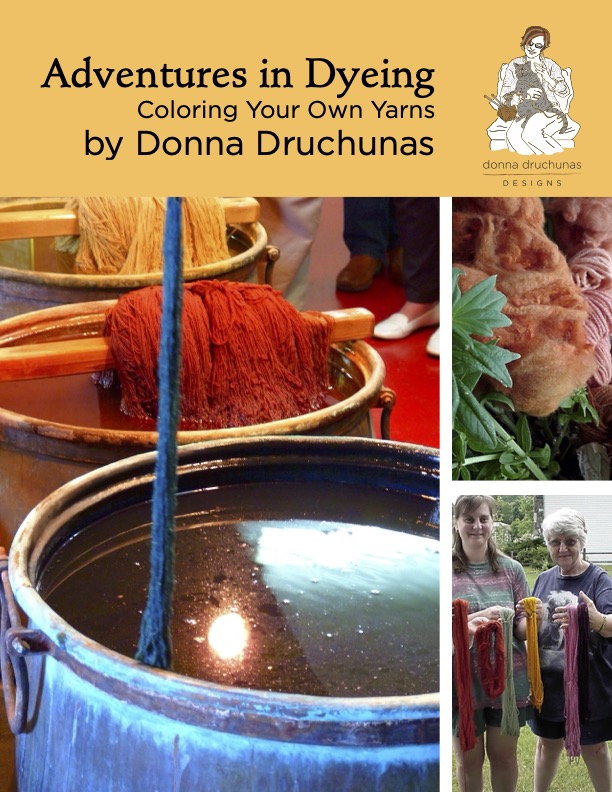
Basic beginner instructions on how to dye your yarns.
Includes 20 pages with sketches to color in your colors before dyeing. Articles were gathered from classes, magazine articles, and past research.
Topics include:
Adventures in Dyeing
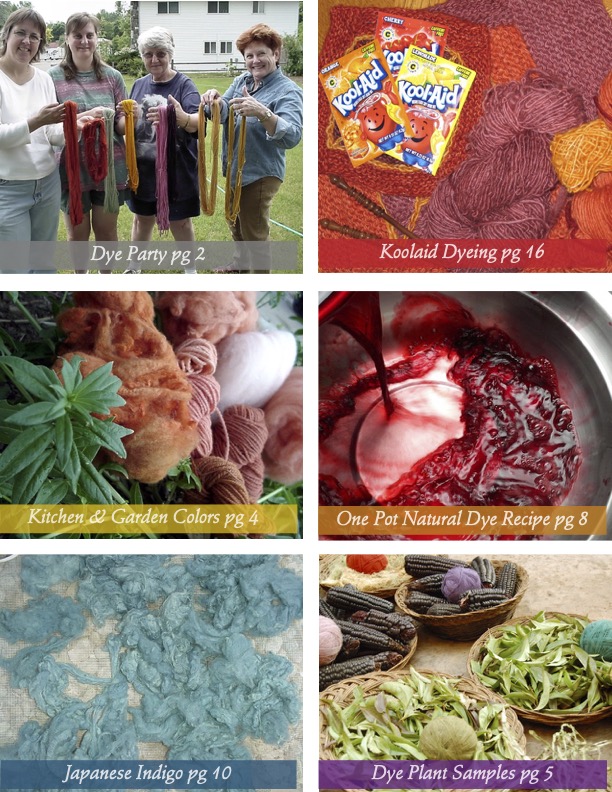
Planning a Dyers’ Party
Natural Dyes from the Kitchen & Garden
Safety, Supplies and Workspace
Preparing, Dyeing, and Finishing Yarn
One-pot Natural Dye Recipe for Wool
Blue Dyes from my Garden
Namahazome—Raw Leaf Dyeing Recipe
Dyeing Wool with Kool-Aid
Preparing, Dyeing, and Finishing Yarn
 There are many reasons to dye your own yarn, fiber, or fabric. You may need a specific shade to add to an intarsia tapestry; you might be trying to recreate the hue of your favorite worn out sweater; you may need to add a special touch to a custom quilt, or you might just like to play with color. Whatever reason you have for dyeing your own yarns or fabrics, there is no denying that nothing is quite as thrilling as dropping a hank of fiber into a dye pot and pulling out a handful of color. When the dyes you use come from the natural world, that just makes the process a little more magical.
In this ebook we’ll be learning about people who use natural dyes to color wool yarns and fleece, cotton fabrics, linen scarves, and more. We’ll learn what natural materials are used to achieve di erent colors. We’ll discuss the pros-and-cons of using natural dyes compared to synthetic dyes. And we’ll discuss the safety and toxicity of various dyes as well as the mordants used to help set the colors.
And, there’s a Kool-Aid dye project and three coloring book pages as a bonus!



 Experience level – advanced beginner
 After I finished my Arctic Lace Knitting Book, I finally allowed myself to explore the world of lace knitting and discovered that is is much more varied and elaborate than I could have imagined. Around the world and over time, knitters in different countries and regions have developed unique styles of lace knitting that range from easy-intermediate (like the knitting of the Oomingmak knitters) to advanced-insanely- difficult (like some of the Victorian patterns designed by English knitters). Other lace styles are used in Estonia, Russia, South America, Lithuania, Germany and Austria, and New Zealand. I’m sure there are even more, but these are the styles I’ve explored so far. – Donna Druchunas –


 Experience: All skill levels, basic knitting skills required.
 Have you ever wondered why some people can read charts easily and others find them incomprehensible? The truth is, charts are written in a code that can be deciphered by knitters who learn the symbols on the page and in their knitting. Charts do not use arbitrary symbols, but each symbol includes the instructions on how to make the indicated stitch! In this class, you will learn the secrets of interpreting chart symbols for texture and cable stitches.


